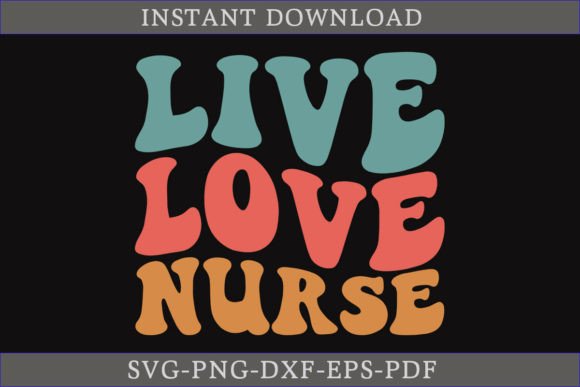
Live Love Nurse Retro Nurse Gift Shirt
A Designer’s First Look: Charm with Clear Intent
When I opened the Live Love Nurse Retro Nurse Gift Shirt design, I didn’t just see a nurse motif—I saw a mood. It’s warm, nostalgic, and quietly confident—like a vintage postcard you’d pin above a clinic desk or stitch onto a soft cotton tote for a new grad. The retro styling leans into mid-century simplicity: clean curves, balanced negative space, and lettering that breathes. No overworked flourishes, no pixelated edges in the PNG preview—just a focused, cohesive graphic built for recognition at a glance. That matters. In embroidery, clarity isn’t decorative—it’s functional.
Where This Design Finds Its Real-Life Rhythm
Last week, I prepped a small batch of embroidered canvas tote bags for a local nursing school’s graduation pop-up. I chose Live Love Nurse Retro Nurse Gift Shirt for three reasons: it scaled cleanly to 4.5 inches wide, held legibility on medium-weight fabric without oversaturation, and carried emotional resonance—not just “nurse,” but *care*, *pride*, *continuity*. It stitched beautifully on a lightweight twill tote using a medium tear-away stabilizer and standard 40-weight poly thread. The satin-stitched outline around the heart stayed crisp; the “Live Love Nurse” script softened just enough to feel handmade, not machine-perfect.
It also worked well on a brushed cotton sweatshirt—though I reduced density by 12% in the fill areas to avoid stiffness. On baby onesies? I resized it to 3.2 inches and swapped the original script for a simplified vector version (using the included EPS file) to ensure tiny letterforms wouldn’t collapse under dense stitching. That flexibility—having SVG, EPS, and clean PNGs—isn’t just convenient. It’s what lets you adapt without redesigning.
Honest Fit: Where It Shines (and Where to Pause)
Live Love Nurse Retro Nurse Gift Shirt is strongest on stable, medium-to-heavy fabrics: denim jackets, canvas aprons, linen tea towels, and structured caps. It reads well on dark backgrounds when paired with bright white or ecru thread—especially since the design’s contrast ratio holds up in both light and shadow zones.
That said, tread thoughtfully on stretchy knits (like jersey tees), ultra-thin fabrics (baby muslin, voile), or highly textured surfaces (terry cloth, bouclé). The script elements and fine interior lines demand stability. On curved surfaces like baseball caps, I recommend testing placement first—center front works better than side panels unless you resize down to 2.8 inches and adjust stitch angles manually.
Also: avoid cramming this into hoops smaller than 4x4 inches. The original layout assumes breathing room. If you’re making embroidered patches or iron-ons, confirm whether the included files contain underlay or pull compensation—those details affect clean edge definition. Since they’re not specified in the product description, always run a test stitch on scrap before committing.
What It Adds to Your Finished Product—Beyond Aesthetics
This isn’t just a graphic—it’s a subtle trust signal. When customers see a well-executed Live Love Nurse Retro Nurse Gift Shirt on a boutique pillow cover or personalized kitchen towel, they register craftsmanship, intention, and niche relevance. Nurses notice the authenticity—the cap shape, the heart placement, the absence of clichéd stethoscopes or cartoonish symbols. That builds credibility faster than any tagline.
For Etsy sellers and craft fair vendors, it elevates perceived value: a $28 embroidered apron feels more considered with this design than with a generic font-and-heart combo. And because it’s delivered as layered, editable vector files (SVG, EPS), you can tweak spacing, recolor elements, or isolate the heart icon for standalone use—making it versatile across product lines without buying multiple designs.
Practical Notes Every Embroidery Designer Should Run Through
- Always test first: Stitch the full design on scrap fabric matching your final substrate—and wash/dry it once to check for puckering or thread bleed.
- Check thread color contrast early: Try black thread on cream fabric and white thread on navy. Does the script remain legible? Does the heart retain shape?
- Review stitch density visually: Zoom into the PDF or SVG mockup—look for tight clusters in the serif details or inside the heart curve. Adjust if needed for your machine’s tolerance.
- Confirm hoop compatibility: Measure the design’s widest point against your most-used hoop size. Don’t assume “fits 5x7” means it stitches cleanly there.
- Inspect corners and curves: Small-radius turns in the script or heart outline can cause needle hesitation or skipped stitches on older machines.
- Test black-and-white mockups: Convert your digital preview to grayscale—this reveals contrast issues invisible in color.
- Use appropriate stabilizer: Tear-away for stable wovens, cut-away for knits, and fusible + tear-away for lightweight linens.
- Verify licensing scope: Since this is marketed as a T-Shirt Design and Graphics asset, confirm whether commercial use (e.g., selling finished embroidered items on Etsy) is explicitly permitted before listing.
Final Thought: A Reliable Anchor in Your Design Toolkit
Live Love Nurse Retro Nurse Gift Shirt won’t wow with complexity—but it doesn’t need to. Its strength lies in quiet consistency: clear intent, adaptable formats, and visual warmth that translates across embroidery projects—from heartfelt baby gifts to professional boutique merchandise. It’s the kind of design that disappears into the product while still saying something meaningful. For craft business owners, Etsy sellers, and small shop creators who value reliability over flash, it’s not just another SVG download. It’s a thoughtful, ready-to-deploy piece of design equity—tested, tuned, and trusted for real work.