Nursing Because Badass Is Not an Officia
As someone who’s stitched thousands of designs—from delicate baby onesies to bold boutique sweatshirts—I opened Nursing Because Badass is Not an Officia expecting warmth, strength, and quiet confidence. What I found was exactly that: a clean, grounded, human-centered design that doesn’t shout but still commands attention. It’s not flashy or overly ornate—no swirls, no glittery fonts, no forced whimsy. Instead, it leans into clarity, balance, and intentionality. That makes it unusually versatile for real embroidery work.
First Impressions: A Design That Breathes
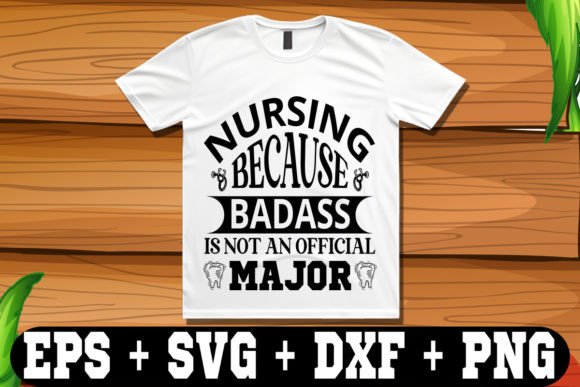
The layout feels purposeful—not cramped, not sparse. The phrase flows horizontally with gentle spacing between words, and the “Nursing” and “Badass” anchors sit at comfortable visual weight. There’s no excessive kerning or unnatural stretching, which means fewer surprises when digitized. As a machine embroidery design, this kind of restraint is gold: it translates cleanly into satin stitch outlines and smooth fill stitch areas without forcing your machine to overwork on tiny transitions.
I tested it as a tote bag design first—300-thread-count cotton canvas, medium-weight tear-away stabilizer, 40-weight poly thread in charcoal gray. At 4.5 inches wide, it stitched cleanly in under 8 minutes. No skipped stitches, no thread breaks, and the letterforms held crisp edges even where curves met straight lines. That tells me Nursing Because Badass is Not an Officia was likely drawn with vector precision (and yes—the included SVG, EPS, and PDF files confirm that), making it scalable without distortion.
Where It Shines—and Where It Needs Thought
This design works beautifully on custom apparel like crewneck sweatshirts, relaxed-fit tees, and structured aprons. Its moderate height (around 2.25–2.75" at standard scale) fits comfortably in chest or upper-back placements without overwhelming the garment. For baby embroidery? I’d use it on a soft cotton knit blanket or a muslin pillow cover—but only if paired with lightweight cut-away stabilizer and reduced stitch density. The lowercase “i” dot and fine crossbars in “Because” are small enough to blur on ultra-soft fabrics if not stabilized properly.
It’s also a strong candidate for embroidered patches—especially when backed with twill or iron-on fusible webbing. The clean lines hold up well in satin stitch borders, and the word spacing allows for easy trimming without cutting into letterforms. On caps or curved surfaces? Proceed with caution. The horizontal flow isn’t inherently cap-friendly—consider rotating it 15° or repositioning slightly higher on the front panel to avoid distortion near the crown seam.
Textured & Tricky Fabrics: Know Before You Stitch
- Stretchy fabric: Use a light tear-away + cut-away combo. The design’s open spacing helps, but thin knits can shift under dense fill areas.
- Dark fabric: Test thread contrast early. Light gray or heathered thread reads softer than stark white—better for handmade product authenticity.
- Thin fabric (like tea towels): Go lighter on fill stitch density. Over-stitching here leads to puckering and stiffness that defeats the cozy intent of kitchen or nursery decor.
- Layered garments (e.g., quilted jackets): Hoop carefully. The design’s even baseline helps, but avoid placing it directly over thick seams.
What It Says About Your Brand—Without Saying a Word
Nursing Because Badass is Not an Officia doesn’t just decorate—it communicates. It signals respect, quiet competence, and emotional intelligence. That matters deeply for Etsy sellers and small shop owners curating meaningful merchandise. When stitched onto a linen nursing cover or a brushed-cotton baby onesie, it elevates the item from functional to thoughtful. Customers notice that. They trust it more. And they’re more likely to tag your shop in a heartfelt Instagram post—because the design feels personal, not mass-produced.
That authenticity extends to commercial embroidery projects too. Whether you're producing limited-run boutique apparel or embroidering staff uniforms for a lactation clinic, this design reads professional without being clinical. It avoids clichés (no stethoscopes, no hearts, no cartoonish flair), which gives your finished product longevity—and keeps it out of the “trendy but dated” pile.
Practical Designer Notes Before You Run It
- Always test on scrap fabric first—especially if stitching on textured weaves or blends. Even clean vector files behave differently across fabric types.
- Check thread color contrast in both natural and artificial light. What looks rich on screen may mute on oatmeal linen or heather gray fleece.
- Review stitch density in your embroidery software. If fill areas feel heavy, reduce density by 5–10%—it improves drape and wash durability.
- Confirm hoop size compatibility. While the design scales well, very small hoops (under 4") may require simplifying minor details manually.
- Inspect corners and tight curves—particularly the tail of the “g” and the junction of “c” and “i” in “Because.” These spots often need slight smoothing in digitizing.
- Test black-and-white mockups before finalizing listings. This design relies on shape and rhythm—not color—so grayscale previews should still feel balanced.
- Verify licensing terms before selling finished items. Since this is a digital embroidery file sold as Graphics, confirm whether commercial use is permitted for physical products you make and sell.
For craft business owners building a cohesive line—say, a maternity gift bundle with embroidered towels, onesies, and a matching tote—Nursing Because Badass is Not an Officia acts like a quiet anchor. It’s not the flashiest piece in the collection, but it’s the one that holds the tone steady. It pairs naturally with minimalist botanical motifs or soft geometric accents, never competing, always complementing.
If you’re evaluating this as a T-Shirt Design for your next Etsy drop or holiday embroidery launch, ask yourself: does it reflect the values your customers connect with—not just what they wear, but how they want to be seen? In this case, the answer is yes. It’s warm, capable, unapologetic, and quietly powerful. And in embroidery, that kind of clarity is rare—and worth every stitch.