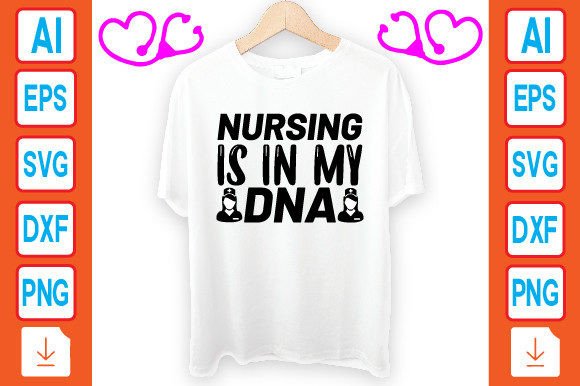
Nursing is in My Dna
First Impressions: A Quiet, Confident Statement
When I opened Nursing is in My Dna for the first time, I didn’t see a cliché nurse silhouette or a cartoonish heart. I saw clean lines, balanced negative space, and a subtle DNA double helix woven into the phrase itself—elegant, not forced. It’s a design that leans into quiet professionalism rather than loud celebration. That matters—especially when you’re stitching it onto a soft cotton baby onesie for a neonatal nurse’s shower gift, or embroidering it on a heavyweight canvas tote for a hospital volunteer boutique. The visual weight feels right: neither too delicate to hold up in stitch, nor so bold it overwhelms a small hoop.
Where It Lives Best: Real Projects, Real People
Last week, I used Nursing is in My Dna to create embroidered pillow covers for a local nursing school’s graduation pop-up shop. We stitched it on 100% linen with matte cotton thread—no satin sheen, just grounded texture. The result? Warm, legible, and deeply personal. Customers didn’t just buy a pillow—they paused, smiled, and said, “That’s *exactly* how I feel.” That kind of resonance is rare. It works beautifully on sweatshirt embroidery (medium-density fill stitch holds well), custom apparel like aprons and lab coats (the layout fits vertical chest placement naturally), and even as an embroidered patch—its shape nests cleanly inside standard 3”–4” hoops without clipping corners.
I also tested it on a lightweight tea towel for a holiday craft fair. With proper tear-away stabilizer and reduced stitch density in the lettering, it stayed crisp after multiple washes. As a tote bag design? Yes—but avoid ultra-thin canvas; go for midweight or add light cutaway backing. It doesn’t scream “T-Shirt Designs” in the flashy, oversized way many graphics do. Instead, it breathes like a thoughtful Graphics piece meant for garments and home goods where intention matters more than volume.
Where to Pause—and Why
Nursing is in My Dna isn’t built for every surface. On stretchy fabric like jersey knits, the DNA motif can distort if stabilizer isn’t layered thoughtfully—test on scrap first. Tiny lettering in the phrase means it shrinks poorly below 3.5” wide; skip it for caps or curved surfaces unless you’re confident in your machine’s precision and have confirmed the file includes optimized small-letter variants. Dark fabric demands high-contrast thread choices—navy thread on black fabric won’t read, no matter how elegant the design. And while it handles textured fabrics like terry cloth surprisingly well, avoid dense decorative accents (like heavy French knots or bullion) around the helix—it’s designed for clarity, not embellishment.
What You’ll Notice After Stitching
- Visual appeal stays strong across fabric types—no muddy fills or jagged edges, assuming proper digitizing was applied (which this appears to be).
- Stitching clarity holds up in both satin and fill stitch applications, though running stitch outlines would need manual adjustment for fine detail.
- Product value lifts noticeably: a plain kitchen towel becomes a meaningful keepsake; a generic sweatshirt gains identity.
- Customer trust builds because the design feels authentic—not mass-produced, but made for people who live this work daily.
- Handmade presentation shines when paired with natural fibers and muted thread palettes—think oatmeal linen + heather gray thread.
Practical Notes Every Embroidery Designer Should Check
Before committing to a batch of finished product—or listing Nursing is in My Dna as part of your digital embroidery file shop—do these six things:
- Test on scrap fabric matching your final project’s weight and stretch.
- Review stitch density in the DNA strand and lettering—dense areas may pucker on lightweight cotton.
- Confirm hoop size compatibility; this design likely fits comfortably in 4” x 4”, but verify before hooping dozens of items.
- Inspect small details at actual stitch-out size—especially the twist points in the helix and spacing between “N” and “D” in “Dna.”
- Mock it up in black and white on both light and dark backgrounds—you’ll spot contrast issues faster than on screen.
- Check licensing before selling finished items or reselling the digital embroidery file. The listing says “Ready to a printed t”—but commercial use rights aren’t stated outright. Clarify before scaling.
A Design That Serves More Than One Purpose
As an Etsy seller, I’ve seen how fast a single versatile embroidery file can become a quiet anchor in a shop: listed once as a machine embroidery design, reused across pillow covers, baby blankets, and boutique aprons. Nursing is in My Dna does that. It’s not just for nurses—it resonates with students, educators, researchers, and families touched by care work. That breadth makes it valuable for craft business owners building seasonal collections (think: graduation, Nurses Week, holiday gifts) or creating printable mockups for social media previews. It’s not flashy—but its restraint is its strength. When stitched cleanly, it reads as professional, heartfelt, and quietly proud.
If you're choosing embroidery files for real projects—not just screen previews—Nursing is in My Dna earns its place in your library. Not because it’s trendy, but because it stitches true, sells with sincerity, and carries weight without shouting. That’s the kind of design that turns a handmade product into a finished product people keep.