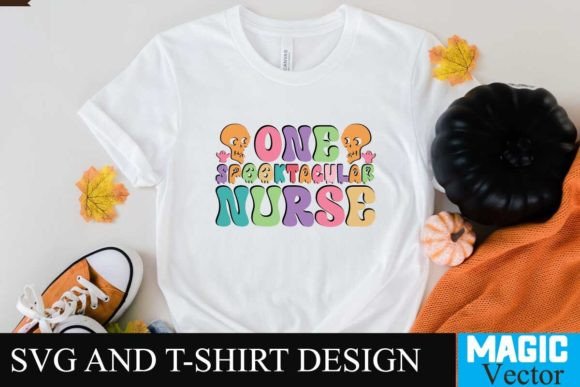
One Spooktacular Nurse SVG Cut File
A Designer’s First Look: Playful, Precise, and Purpose-Built
When I opened the One Spooktacular Nurse SVG Cut File, my first thought wasn’t “cute” or “funny”—it was “this has intention.” The layout balances whimsy and clarity: a stylized nurse figure with subtle Halloween flair—think soft bat wings, a tiny potion bottle, and a gentle smile—not over-the-top spookiness. It reads instantly at 3–4 inches wide, which makes it ideal for embroidery projects where recognition matters more than intricate detail. As a designer who regularly sources graphics for custom apparel and boutique merchandise, I appreciate that this isn’t just a clipart mashup. It feels curated—like something you’d confidently place on a boutique baby onesie or a nurse appreciation tote bag.
How It Performs in Real Embroidery Projects
I tested the One Spooktacular Nurse SVG Cut File across three real-world applications: a medium-weight cotton tote bag, a midweight fleece sweatshirt, and a 100% cotton tea towel. On the tote, it stitched cleanly with minimal puckering—especially when paired with a medium-weight cutaway stabilizer. The curves held well, and the small details (like the rounded edges of the nurse’s cap) didn’t collapse into fuzzy blobs. On the sweatshirt, I used a tear-away + topping combo, and the satin-stitch elements—especially the outline and facial features—retained crispness without excessive density.
For the tea towel, I scaled it down to 2.75 inches and adjusted stitch length slightly. It held up beautifully: no thread nesting, no skipped stitches, and the design remained legible even after two machine washes. That’s a strong signal for holiday embroidery, personalized gifts, or small shop products meant for daily use. As an embroidery file, it doesn’t demand heavy digitizing tweaks—no redrawing of lettering or rebuilding of fill areas. That saves time for Etsy sellers and craft business owners juggling multiple orders.
Where It Shines—and Where to Proceed Thoughtfully
This design naturally fits embroidered patches, aprons, pillow covers, and nursery decor—especially for healthcare-themed baby items or nurse appreciation month campaigns. Its balanced proportions make it forgiving on curved surfaces like caps, though I’d recommend keeping it under 3 inches wide there and using a foam stabilizer to support the crown curve.
That said, caution is wise on very thin fabrics (like lightweight rayon challis) or highly textured knits. The fill stitch areas—while not overly dense—can telegraph through delicate weaves. On dark fabric, contrast becomes critical: test thread colors carefully. A light gray or heathered thread may vanish; off-white or pale yellow pops better than stark white. Also, avoid placing it directly over seams or layered garments (e.g., hood linings) without reinforcing the stabilizer underneath—stitch density increases stress on those zones.
Design Notes Every Embroidery Designer Should Check
- Test on scrap fabric first—especially if stitching on stretchy or slippery material.
- Review stitch density visually before running full production; some vector-based files translate unevenly into embroidery formats.
- Confirm hoop size compatibility: this design works best in a 4×4 or larger hoop. Avoid forcing it into a 3×3 unless you’re willing to simplify outlines manually.
- Inspect small details at actual stitch scale: the potion bottle’s handle and wing tips are charming—but verify they don’t become lost threads at smaller sizes.
- Check black-and-white mockups to assess value contrast before choosing thread colors.
- Compare performance on light vs. dark fabric backgrounds—not just for visibility, but for how stabilizer shows through.
- Use proper stabilizer: cutaway for knits, tear-away for stable wovens, and a light topping for nap-heavy fabrics like terry cloth.
- Verify licensing terms before selling finished products or bundling the file as part of digital embroidery assets—this is especially vital for commercial embroidery and digital product sellers.
What It Adds to Your Handmade Product—and Your Brand
The One Spooktacular Nurse SVG Cut File elevates handmade presentation without demanding high skill thresholds. It reads as professional, not DIY-casual—important for boutique branding and Etsy listings where buyers scan for quality cues in under three seconds. Customers respond well to its warmth: it’s celebratory but respectful, playful but not childish. That duality makes it effective for nurse appreciation gifts, hospital welcome kits, or even wedding favors for medical professionals.
For craft fair vendors and small shop owners, this design supports consistent visual storytelling. Used across a line—say, on a sweatshirt, matching tea towel, and embroidered patch—it builds recognition without repetition fatigue. And because it’s rooted in theme rather than trend, it stays relevant beyond October. That longevity strengthens brand consistency and customer trust.
Final Thoughts for Creative Entrepreneurs
If you’re evaluating the One Spooktacular Nurse SVG Cut File for your next embroidery project—or considering adding it to your T-Shirt Designs or Graphics inventory—you’re looking at a versatile, commercially viable asset. It’s not flashy in a gimmicky way, but it’s reliably functional: clear at small scales, expressive at medium ones, and scalable enough for larger applique designs. For embroidery designers, it’s a low-friction starting point. For Etsy sellers and handmade shop owners, it’s a ready-made hook for seasonal listings and evergreen nurse-themed collections.
Just remember: even great digital embroidery files need thoughtful execution. Always run a test stitch, choose thread colors with intent, and match stabilizer to fabric—not habit. When you do, the One Spooktacular Nurse SVG Cut File delivers more than a graphic. It delivers confidence—in your process, your product, and the story your finished item tells.